


The client came in with chronic concerns: diffuse redness, visible surface capillaries on the cheeks and around the nose, and reactive, sensitive skin showing signs of dehydration. Fitzpatrick II.
Gina Maltese, a Licensed Esthetician, built the protocol around the client's skin in a logical sequence:
Gina Maltese, a Licensed Esthetician, built the protocol around the client's skin in a logical sequence:
Two sessions — and the client's skin looked calmer, more even in tone, with the network of surface capillaries appearing noticeably less prominent.
How a Cold Plasma and Cooling Protocol Calmed Sensitive,
Redness-Prone Skin in Two Sessions
Redness-Prone Skin in Two Sessions
Cleanse → Cold Therapy → Cold Plasma → LED → Protect

Meet Gina Maltese,
Licensed Esthetician
Gina's approach: tailor the protocol to each client's specific skin so the result is both visible and comfortable
This protocol was performed by Gina Maltese — a Licensed Esthetician, skin care expert, and owner of two spas: in the Poconos (Pennsylvania) and in Ventura (California). In the field since 2013, she works closely with dermatologists and plastic surgeons and specializes in customized facials and advanced protocols

Client: female, 30s–40s
Skin type: Fitzpatrick II — sensitive, reactive, dehydration-prone
Main concern: persistent redness and visible capillaries
Visible signs: diffuse erythema, surface capillaries on the cheeks and nose, signs of sensitivity
Sessions: 2
Recommended every 4–6 weeks.
Protocol goal: a calmer, more even-looking complexion and barrier comfort, without aggression or downtime
Visible result: more even tone, a softened look of capillaries, a sense of comfort
Skin type: Fitzpatrick II — sensitive, reactive, dehydration-prone
Main concern: persistent redness and visible capillaries
Visible signs: diffuse erythema, surface capillaries on the cheeks and nose, signs of sensitivity
Sessions: 2
Recommended every 4–6 weeks.
Protocol goal: a calmer, more even-looking complexion and barrier comfort, without aggression or downtime
Visible result: more even tone, a softened look of capillaries, a sense of comfort
Skin Concerns & Treatment Goals
What the Skin Was Showing
A visible vascular network
Key insight:
for this kind of skin, the strategy isn't intensity — it's a sequence of comfortable steps that prepare the surface without provoking reactivity.
Through a thin epidermis, surface capillaries show easily, so the skin tone reads as uneven even at rest
Dehydrated texture
When the upper layers lack water, the surface looks less smooth and light falls unevenly — and the redness reads more strongly
A reactive surface
In sensitive Fitzpatrick II skin, the stratum corneum is thinner and reacts more readily to heat, friction, and active acids — any over-stimulation visually amplifies redness.


How Each Step Built the Result
Gina performed the protocol in the following sequence:
Protocol Logic:
Step 7. Protect — Hydration + SPF
Step 6. LED — Red 630 nm + Blue 415 nm
Step 5. Cooling Finish
Step 4. Oxygen Infusion
Step 3. Cold Plasma
Step 2. Cold Therapy
Step 1. Gentle Cleanse







"My skin feels so much calmer and looks more even right away. The redness is noticeably reduced, and my skin just feels healthier overall."
- Combining cold therapy with cold plasma enhances the calming effect and makes the result more comfortable.
- With visible capillaries, it's best to avoid aggressive exfoliation and focus on comfort and barrier support.
- Consistency matters: a series of treatments delivers the best and most stable visible result.
- Post-care is critical: hydration and SPF are essential to maintaining the result.
- Pro tip (from the provider): for clients with chronic redness, rosacea, and broken capillaries, Gina favors Avène (with thermal spring water) and EltaMD SPF.
Client Feedback
Insights from Gina Maltese
After two sessions, the skin looked:
- calmer and less reactive
- more even in tone
- with a softened, less prominent look to the surface capillaries
- plumper and more comfortable
- fresher, with more even light reflection
Visible Result After One Session
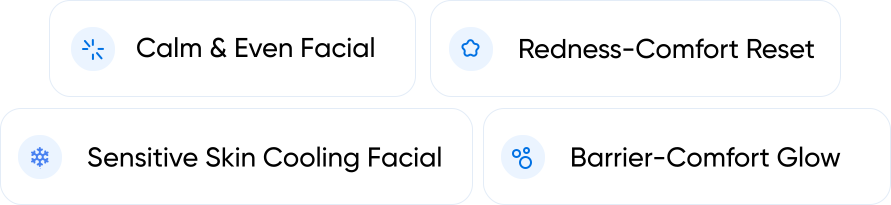
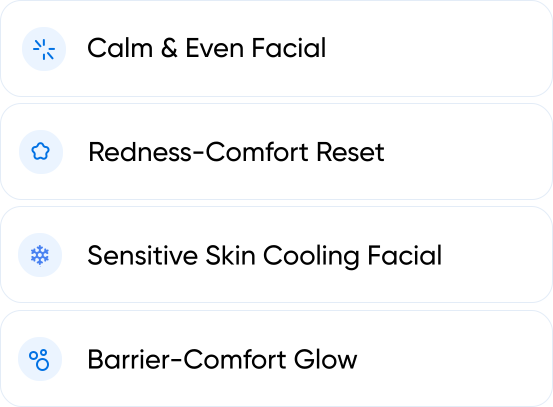
Spa Menu Positioning
Structured positioning turns a "redness facial" into a clear series with result logic — easier to explain the value to the client, and easier for the practice to build repeat visits.
Zemits Technologies Used in This Protocol